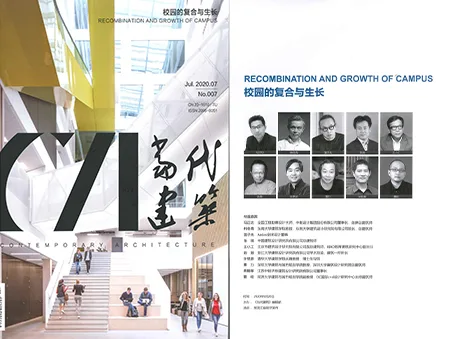
As an educator with extensive teaching experience in both Taiwan and Beijing, Dr Andy Wen shares his unique perspectives on a student’s learning process and campus development.
Andy believes the design of education facilities involves four key elements.
The first is to embed meaning into the architectural forms. Buildings can convey the values of the school and its aesthetics.
The second is to integrate local culture in the design so students and staff can form a connection with the campus emotionally.
The third is to scale appropriately because an amicable campus space provides ample sensory experience and enhance the sense of belonging for its students.
The fourth is to emphasise interaction by using non-functional spaces as communal and multi-functional spaces to promote social interaction and cultivate memories for graduates within the campus.
Andy elaborates his design principles with the design process of Xi’an Jiaotong-Liverpool University Central Building. Inspired by the Taihu Stone in Suzhou, the central building is a modern interpretation of the spirit of scholars while responding to the surrounding natural environment. The distinctive architectural form links key functional activities within the building and creates a unique spatial experience for all users.
“Architecture on the campus is the first lesson that can be taught to students because these spaces have a significant influence on them. The best approach to campus development should be “growing” buildings from the site to create an enriched and interactive campus environment.” – Dr Andy Wen.