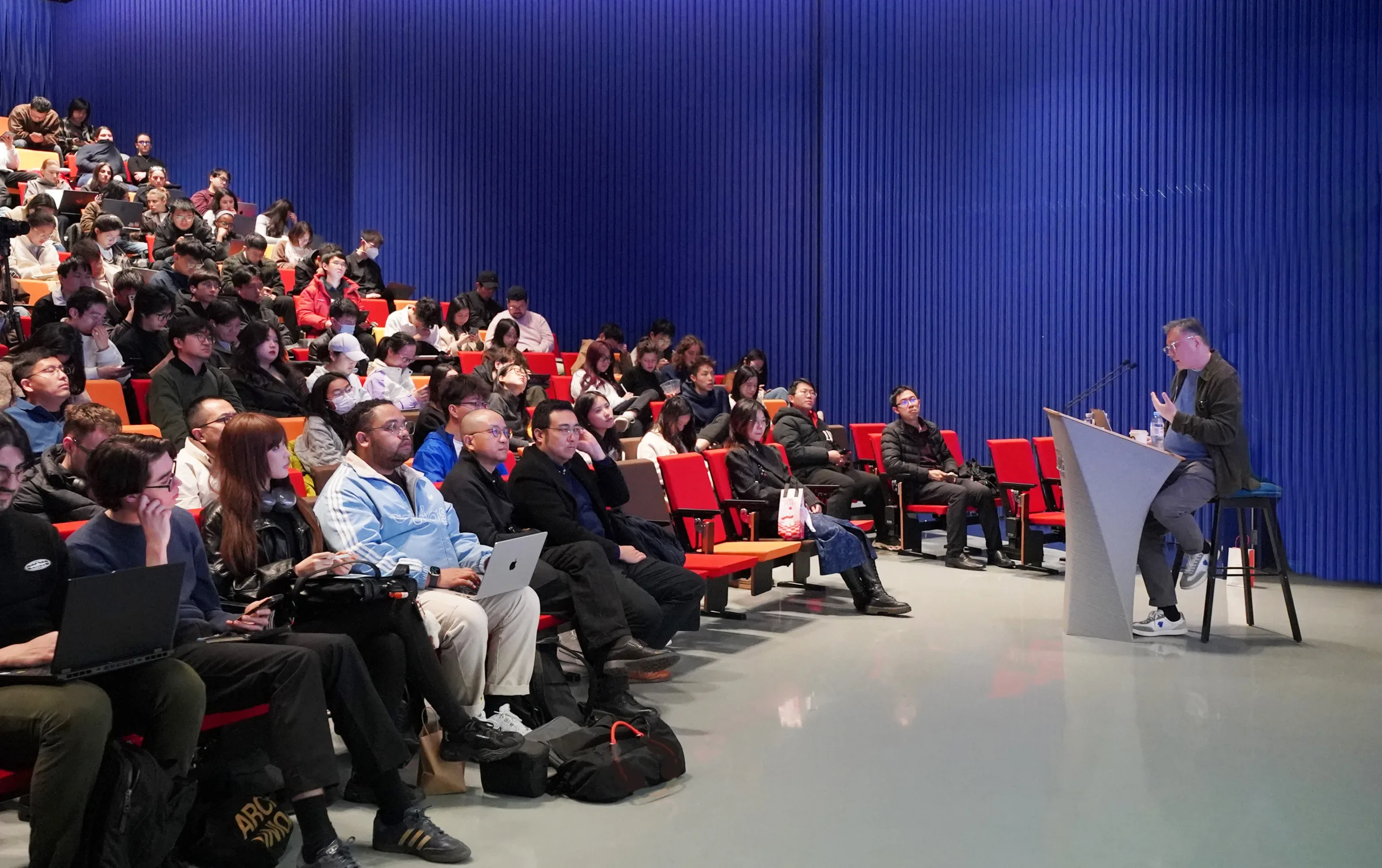
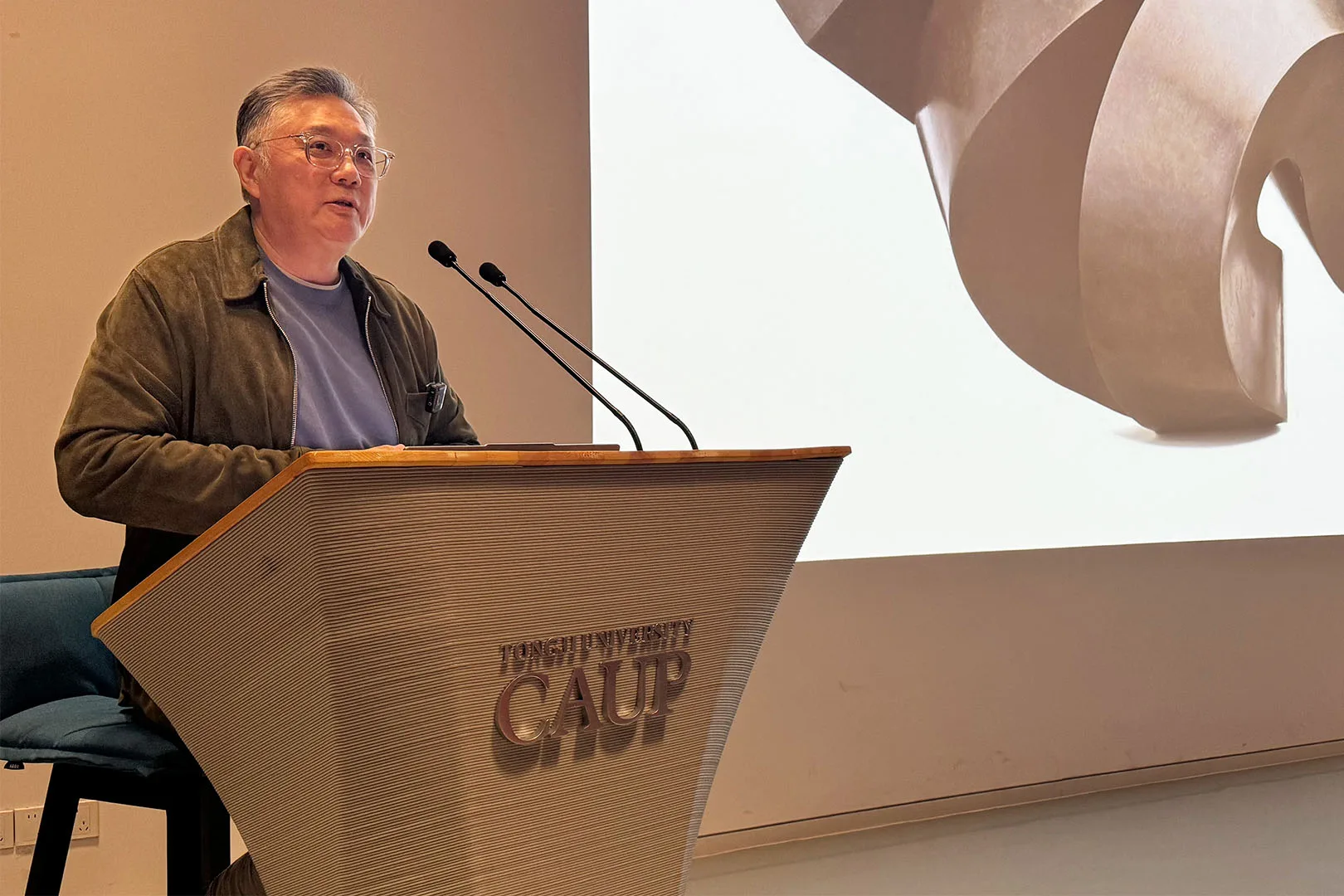
Aedas Global Design Principal Ken Wai returns to Tongji University after four and a half years, delivering a lecture titled ‘Blueprint and Brick – Bridging Between Design Poetry and Engineering Realities.’ Addressing students and faculty at the School of Architecture and Urban Planning, he shares insights from his recent practice, exploring the dialogue between design intention and construction reality.
Ken begins by challenging a common misconception that architecture is merely about designing buildings. He notes that architects constantly navigate tensions between art and science, intuition and logic, vision and buildability. His lecture examines how poetic concepts on paper can be translated into built form.
Using the Yohoo Museum in Hangzhou, recognised by Dezeen as one of China’s Ten Most Beautiful Buildings of 2025, Ken illustrates his belief that ‘form follows meaning.’ Located between the Beijing-Hangzhou Grand Canal and the Liangzhu Cultural Heritage site, the project reinterprets the museum as a ‘boundless’ space. By lifting the main volume and opening the ground floor entirely to the public, the design creates a 24-hour urban living room that encourages interaction and community engagement. ‘Architecture should open up the city, not create obstacles,’ he says.
Introducing the Nanhu Future Science Park, Ken emphasises that architecture is secondary to the spaces between buildings. Inspired by the corridors of Suzhou gardens, the masterplan connects research clusters with flowing walkways, fostering interaction and flexible working environments. He notes that contemporary workplaces should allow moments of pause and exchange.
For the Chongqing Gaoke Group Office Tower, which embodies the concept of ‘Aurora Dance’ in its architectural form, Ken demonstrates how close collaboration transforms ambition into reality. To achieve a seamless curved façade, each glass panel twists 8.8 degrees, ten times that of Shanghai Tower, realised through extensive coordination, 3D scanning and GPS positioning. He concludes, ‘Only extreme engineering can achieve extreme design,’ highlighting the importance of trust and shared commitment between architect and client.